The Quiet Stories That Shape Us

There is a quiet power in the stories we tell and retell. They are not just entertainment or filler for the gaps between tasks. They are the threads that hold a community together. At Tokoiti, I have come to see how the simple act of telling stories in our staffroom, our gatherings, and our classrooms has become one of the most important ways we build culture.
Humans have always organised our experience through story. We take the events of our lives, shape them into narratives, and in doing so make sense of who we are and where we belong. From the myths and legends passed down around fires, to the stories that whānau tell across generations, story has always been the backbone of identity. Schools are no different. What we talk about, what we remember, and what we laugh about in our meetings and staffrooms becomes a living record of who we are as a community.
The Stories That Stick
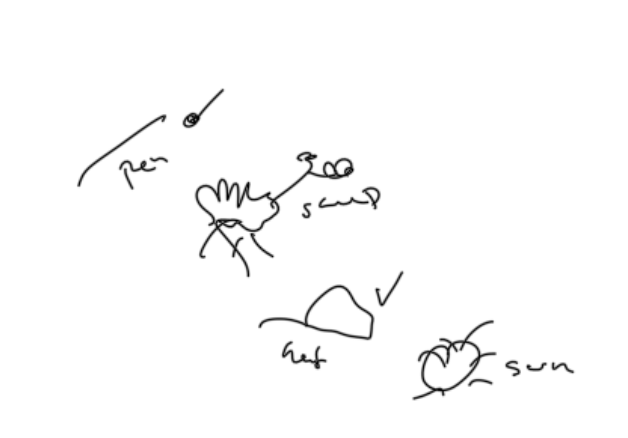
It is not usually the big announcements or the formal speeches that stay with us. It is the small, almost throwaway stories that become part of the fabric of our culture. One that has become a little legend at Tokoiti is what we now simply call “the sheep drawing.”
It happened during a professional learning session. We were asked to do some quick sketches, just simple drawings to keep the exercise light. I drew what I thought was a sheep. When I looked at it again, I realised it was utterly unrecognisable. In fact, it was so bad that I had to write the word “sheep” next to it. Everyone laughed, and the laughter kept rolling.
That could have been the end of it, just a funny memory. But stories have a way of growing legs. When I shared the tale with my students, one of them asked with innocent curiosity, “Did you draw that with your eyes shut?” We all burst out laughing. From that point on, whenever I picked up a pen to sketch something on the board, I would hear a voice remind me to keep my eyes open. It has become a running joke, a story that has lasted years, because it captures something deeper about our school culture.
“It tells us it is safe to be imperfect. It reminds us that vulnerability can actually be a strength.”
The sheep drawing is just one example, but it speaks to something bigger. Collective stories foster belonging. When we laugh about the same things, recall the same moments, and pass down the same anecdotes, we build a sense of “this is who we are.” For new staff, hearing these stories is like being given the keys to the culture. For students, it is a sign that they are part of a living tradition that values humanity over perfection.
In our Te Noho Tahi gatherings, we intentionally create space for these kinds of stories. We sit together, not to talk about data or deadlines, but to share the small pieces of our lives. Sometimes it is a funny mishap. Sometimes it is a memory of a family tradition. Sometimes it is simply noticing how someone is doing that day. Over time, these stories accumulate into something much greater than the sum of their parts.
This is not just true within schools. As a country, we see it in the way we return to stories of ANZAC each year. Every April, we gather to remember not just facts about history but the narratives of courage, sacrifice, and loss that shape who we are as a nation. Those commemorations are not about data or outcomes. They are about belonging. In a smaller, everyday way, our school stories do the same thing. They anchor us in something shared.
“Collective stories foster belonging. They are how we say to each other: this is who we are.”
The Living Record
What has struck me most is how these stories are starting to live on without prompting. I recently discovered that some of our students had begun keeping their own little journals, recording funny or meaningful moments from the day. They were creating their own record of the life of the class, a kind of informal yearbook being written in real time. No one asked them to do it. It just emerged, because they had experienced how powerful storytelling can be.
This is where Te Noho Tahi shows its deeper value. It is not just a daily pause. It is a practice that keeps stories alive. When we gather and share, we are saying that what matters is not just the tasks we complete but the life we share together. And when students take up that same practice, it shows that they are learning the same lesson: that connection is made not only through work but through story.
Why Stories Matter
Why does this matter for well-being? Because story is how we carry meaning. In stressful times, it is easy to reduce people to their output, their role, or their performance. Story resists that reduction. When I know the story of the colleague who once drew the infamous sheep, I do not just see them as a teacher. I see them as human, someone I can laugh with, someone I can belong with. When I know the story of a student’s pepeha, or the story of their family tradition, I see them as part of a wider web of connections.
Stories allow us to be more than just our to-do lists. They allow us to be people in relationship with one another. And in that space, well-being is nurtured almost naturally.
“Stories allow us to be more than just our to-do lists. They allow us to be people in relationship with one another.”
The Quiet Work of Culture
So much of school life is loud, urgent, and measured. Reports need writing, assessments need marking, and timetables demand attention. But culture is built quietly. It is built in the stories we tell at the end of the day, in the way we retell a joke years later, in the collective memory of a sheep that looked nothing like a sheep.
That is the quiet work of Te Noho Tahi. It reminds us to make space for those stories, to notice them, to revisit them, and to treasure them. Because when we do, we are not just sharing laughs or filling time. We are shaping who we are.
What are the quiet stories in your own school, workplace, or whānau that have become part of “who you are”?