The Living Heartbeat of Te Noho Tahi
.png)
When I first began thinking about teacher wellbeing, I imagined something practical. The pressures of school leadership are heavy, and the demands on teachers grow more complex every year. I wanted a way to create a space where staff could be together without pressure, where we could breathe, talk, or simply sit in silence. That was the seed of Te Noho Tahi.
The model was simple at first. Gather together daily. Protect that time fiercely. Let it be free of agendas. Use tools like AI to reduce the clutter of administrative tasks so that time could be focused on presence, not paperwork. Make space for supervision, both formal and informal, so people could share honestly and safely.
It was never about another programme to tick off a list. It was about cultivating a culture of presence.
“The most powerful gift we can give each other in schools is our presence. Not more meetings, not more systems, simply being together in a way that feels human.”
Extending the model to Trekkers
Very quickly I saw that the same principles could hold true for our students, who we call Trekkers as they trek through their learning journey. If teachers benefit from protected time, why would Trekkers not? If adults need moments where there is no outcome expected, no judgement or measurement, then surely young people need it even more.
So we began. Twenty minutes at the end of each day, set aside for connection. I created a menu of activities so there would always be something to choose from. Some were calm and mindful: breathing exercises, listening for sounds, or drawing moods as colours and shapes. Others were playful: “Would you rather” questions, laughter chains, or guessing emotions. Still others were reflective: roses, thorns, and buds, or compliment circles.
It was all about tone. This was not assessment, it was not learning for the sake of a grade. It was simply us, together, being human.
“The purpose of Te Noho Tahi is not to produce an outcome. It is to give us time to be human together, which is what makes all the difference.”
At first I led it carefully, keeping the focus light and relational. I noticed that the Trekkers responded with openness. They shared stories, they listened with kindness, and they slowly came to trust that this time was theirs.
The moment it became theirs
There was a turning point. One morning, just before lunch, I noticed the Trekkers doing something without any prompting from me. At exactly 11:11 they all paused. It was just one minute, yet every Trekker stopped. Some closed their eyes and made a wish, some took a deep breath, others just reflected quietly. For the first few days I did not understand what was going on, I simply watched in silence as it unfolded. Eventually I asked them about it, and that was when I discovered the ritual they had created together.
I had no hand in creating this, yet it grew within the class like a quiet ritual of their own. They developed it together, and I was not involved at all, which makes it even more powerful. What moves me most is that they have allowed me to be part of it. This is uniquely theirs, and I feel privileged every day to share in it. In that one minute I find myself reflecting on what a gift it is to be part of such an amazing class. The timing is perfect, it reenergises both me and the Trekkers, giving us a shared pause that restores us and prepares us for the rest of the day.
“The 11:11 pause became a reminder that Trekkers do not just participate in Te Noho Tahi, they shape it. They teach us as much as we teach them.”
For me, it was powerful. That one minute reminded me that presence does not have to be elaborate. It can be as simple as pausing together, no explanation needed. The Trekkers had taken the spirit of Te Noho Tahi and made it their own.
Why it matters
Schools are often full of noise. The rhythm of bells, the rush of transitions, the weight of expectations. Both teachers and Trekkers can feel like they are constantly on a treadmill that never slows down. Te Noho Tahi interrupts that. It places a marker in the day that says, here we stop. Here we notice. Here we are more than learners and teachers, we are people together.
That matters deeply for Trekkers who go home to uncertainty, for those who carry anxiety or sadness, and for those who simply need to know they belong. Ending the day with connection and calm creates a different transition into home life. It gives them grounding.
For staff, the same is true. Protecting time for connection ensures we see each other as whole people, not just roles. We notice when someone is struggling, we share when we are finding things hard, and we celebrate small joys.
The tree that holds it all
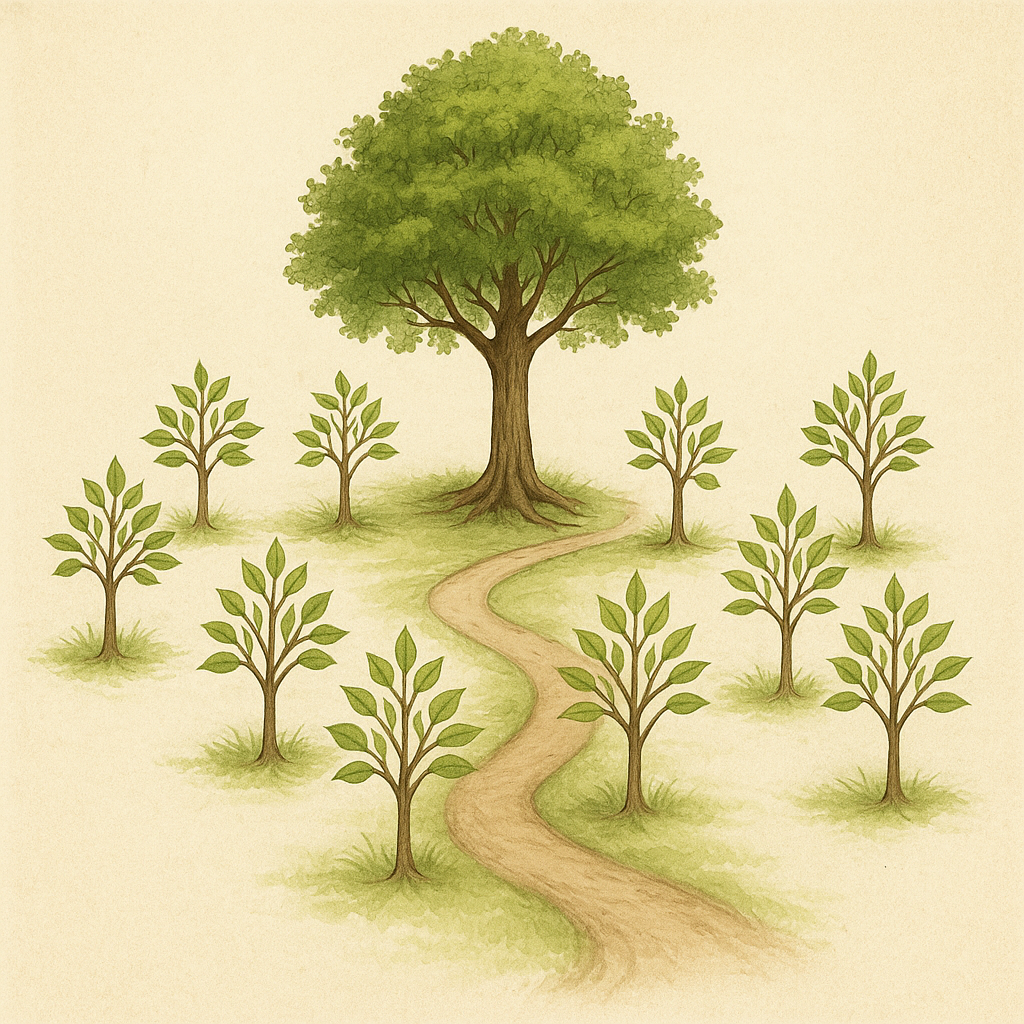
The image we use for Te Noho Tahi is a tree. Its roots are our values of presence, manaakitanga, and whanaungatanga. The trunk is the leadership and the structures that support the model. The branches hold the daily practices, the spaces for listening, the supervision options, and the use of AI to protect time. The leaves and fruit are the outcomes: wellbeing, relationships, resilience, and a school culture that flourishes.
That tree is not just a symbol for staff, it is also something tangible for us. We had a tree in our school grounds that was very special, yet it was damaged by contractors. Rather than let that be the end of its story, we brought it into the classroom to be our living reminder of Te Noho Tahi. It now stands with us each day as a marker of connection and presence. We have not yet added drawings or leaves to it, although that may come in time. For now, simply having the tree with us is enough, reminding us that connection is something we choose to protect and carry forward together.
“The Te Noho Tahi tree is not an abstract idea. It is something we grow together, day by day, leaf by leaf.”
Stories not scores
The success of Te Noho Tahi is not measured in charts or numbers. It is told in stories. The Trekker who says they feel safe here. The colleague who admits they were struggling until someone noticed. The laughter that erupts during a silly game. The quiet moment of stillness that helps a Trekker calm before heading home.
That is enough. In fact, that is everything.
A challenge for leaders, teachers, and parents
If you are reading this as a leader, a teacher, or a parent, here is my invitation. Protect some time each day that is not about outcomes. A time where the only goal is to be present together. Start with something small. One minute at 11:11, a short story circle at the dinner table, or a pause with your staff before the rush of the day.
Do not measure it. Do not evaluate it. Simply protect it. Presence, when given freely, changes people.
“Presence, when given freely, changes people. It may not change the whole world in that moment, yet it may change the world for someone.”
Conclusion
Te Noho Tahi began as a wellbeing model for staff. It became a daily rhythm for our Trekkers. What began as something I introduced has grown into traditions that belong to them. The 11:11 pause is a perfect example, a ritual they created without me that I am privileged to be part of.
The beauty of Te Noho Tahi is not that it is polished or prescribed, but that it is shared. I feel immense pride watching our Trekkers carry it forward, and gratitude that they have invited me into something uniquely theirs. In that invitation I am reminded that presence changes people, and that the living heartbeat of Te Noho Tahi is not found in any plan I wrote, but in the culture our Trekkers have grown together.
“The living heartbeat of Te Noho Tahi is presence, a presence that is shared and shaped by our Trekkers. That is what makes all the difference.”