The Courage to Step Off the Path
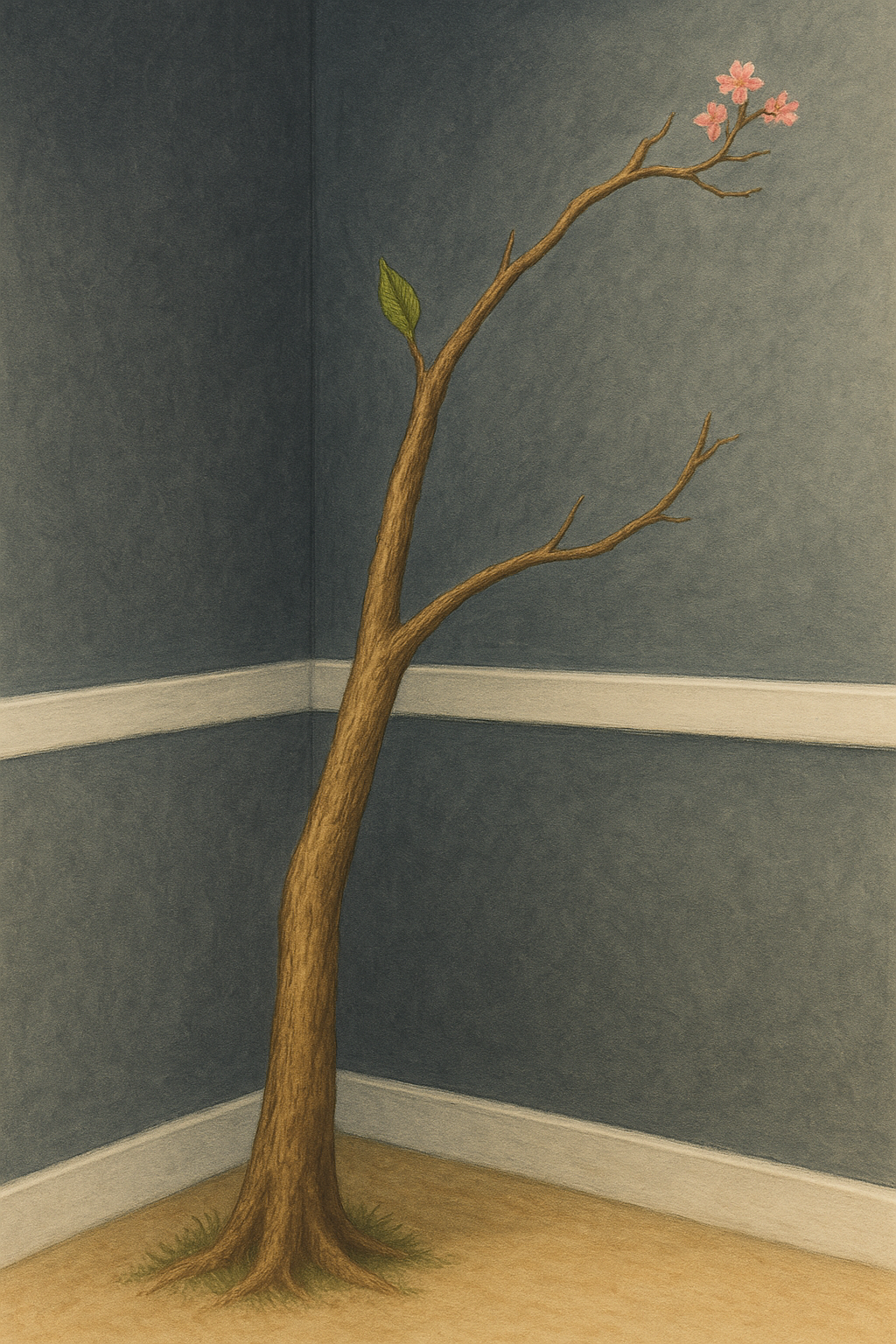
It’s the last day of term. The school bell rings one final time, and there’s that familiar ripple, not celebration exactly, but something like relief. The term is done. Just.
For many of us, this next part is not a break. It’s a shift.
This is not a holiday.
It’s non-contact time.
That phrase is so often misunderstood. It implies absence or disconnection. In truth, this time is deeply present. It is the quiet transition from the visible, timetabled work of being in classrooms to the quieter, more flexible work of preparing for what comes next. Planning, reflecting, resetting, and rebuilding.
This time matters. It is where good teaching grows.
It begins, if we let it, with a pause.
There’s a moment in The Twits that I keep coming back to. Mr Twit, always scheming, decides to play a trick on his wife. Each day, he adds a small wooden block to the bottom of her walking stick and the legs of her chair. Nothing dramatic. Just a tiny shift. She doesn’t notice at first. Over time, she starts to believe she is shrinking.
Because she never stops to really look.
“If we don’t stop to notice what’s changing, we start believing we are the problem.”
This term has felt like that. The days got heavier, the meetings stacked up, and the list grew longer. Without realising it, we started to bend under it. We felt the weight but not the shift, because we were too busy to stop.
Te Noho Tahi reminds me to stop. At our school, this isn’t an initiative or a programme. It’s a way of being. Every day, staff gather for no reason other than to be together. There is no agenda, no task, and no outcomes. Just presence. In that space, we remember who we are beyond the roles. We connect, we notice, and we breathe.
“Te Noho Tahi doesn’t protect time to do, it protects time to be.”
Presence isn’t passive. It is one of the hardest things to hold onto in a system that rewards motion. The courage to pause, to stop and look around, is the kind of leadership that prevents us from disappearing beneath the weight of invisible work.
That’s what non-contact time needs too. Not just time to tick off tasks, but time to look up. Time to notice what needs attention and what can be let go. Time to prepare with intention, not panic. Time to remember that we are not shrinking. The ground has shifted, yes, but we are still here, still standing.
In my classroom, there is a tree. It was once rooted outside, but it was damaged by contractors rushing to finish a job. We could have removed it. Instead, we brought it inside. Now it stands in the corner, waiting. We haven’t yet added the leaves, those will come later. Already, it says something. It reminds us that presence is not about perfection, it is about what we choose to carry forward.
“The tree didn’t stop being important when it was damaged, it just found a new place to grow.”
That’s how I see this time ahead. Not as a break from the work, but as a different way of holding it. Planning for the new term, adjusting our maps, rebuilding routines, sitting with the hard bits, and making space for the joy.
If you are a teacher reading this, I see you. You may not be in the classroom next week, but you are not on holiday. You are shifting gears, from delivery to design, from performance to preparation, from noise to thought.
If you are not a teacher but someone who loves one, trust me, they are still working. The work just looks different now. It lives in notebooks and late-night emails and quiet reflections at the kitchen table. It lives in the pause before the next full breath.
“Non-contact time isn’t the absence of work, it is the presence of thought.”
So here is my gentle invitation.
Before you dive into reports or re-sorting your planning folders, give yourself a moment. A true pause. Go outside. Look at the trees. Ask what’s grown, what’s healed, and what still needs care.
Not so you can fix everything, just so you can see.
“You don’t have to solve it all, but you do have to stop long enough to notice.”
That is what I’ll be doing in these early days of the break. Pausing, looking back, planning forward, and reminding myself that leadership is not just what we do. It’s how we show up, especially when no one is watching.
The courage to step off the path is not about leaving the journey. It’s about pausing beside it, noticing the road, and choosing your next steps with care.
We have just run a sprint.
Not the kind with medals or cheering crowds, but the kind where the track never seems to end and the finish line moves with each new demand. Every email, every yard duty, every surprise fire drill or misplaced permission slip, has been another stride. You didn’t get to slow down. You didn’t always have time to breathe. Still, you kept running.
This sprint wasn’t just for teachers.
It was for the support staff who kept everything moving behind the scenes, for the teacher aides who were steady anchors for our most vulnerable learners, for the admin teams who fielded phone calls, bandaged knees, and found the missing sports shirts. For every staff member who showed up tired and kept showing up anyway. This wasn’t just a term, it was a season of effort, generosity, and grit.
“You may not see yourself on a podium, but you are carrying a team across the line.”
Now we are in the pause before the next race. This isn’t about stopping. It’s about catching your breath. Walking the track. Checking your footing. Looking at where you’ve been, and quietly preparing for where you will go next.
You are not behind. You are right where you need to be.